
以前很多人以为,孩子学外语要等上学、报班、背单词。但不少国际视野很强的美国家庭,早就用了另一套方法:直接把语言环境搬进家里——请一位会讲普通话的中国互惠生,让孩子在吃饭、游戏、讲故事、出门、睡前这些日常场景里,自然接触中文。🌍📚
因为低龄语言习得,拼的从来不是“上几节课”,而是高频输入、真实互动、持续重复。外语如果只存在于课堂,孩子容易学完就忘;可一旦进入生活,语言就会慢慢变成反应。对很多外国家庭来说,互惠生不是单纯带娃,而是把多语言和跨文化教育前置了。✨
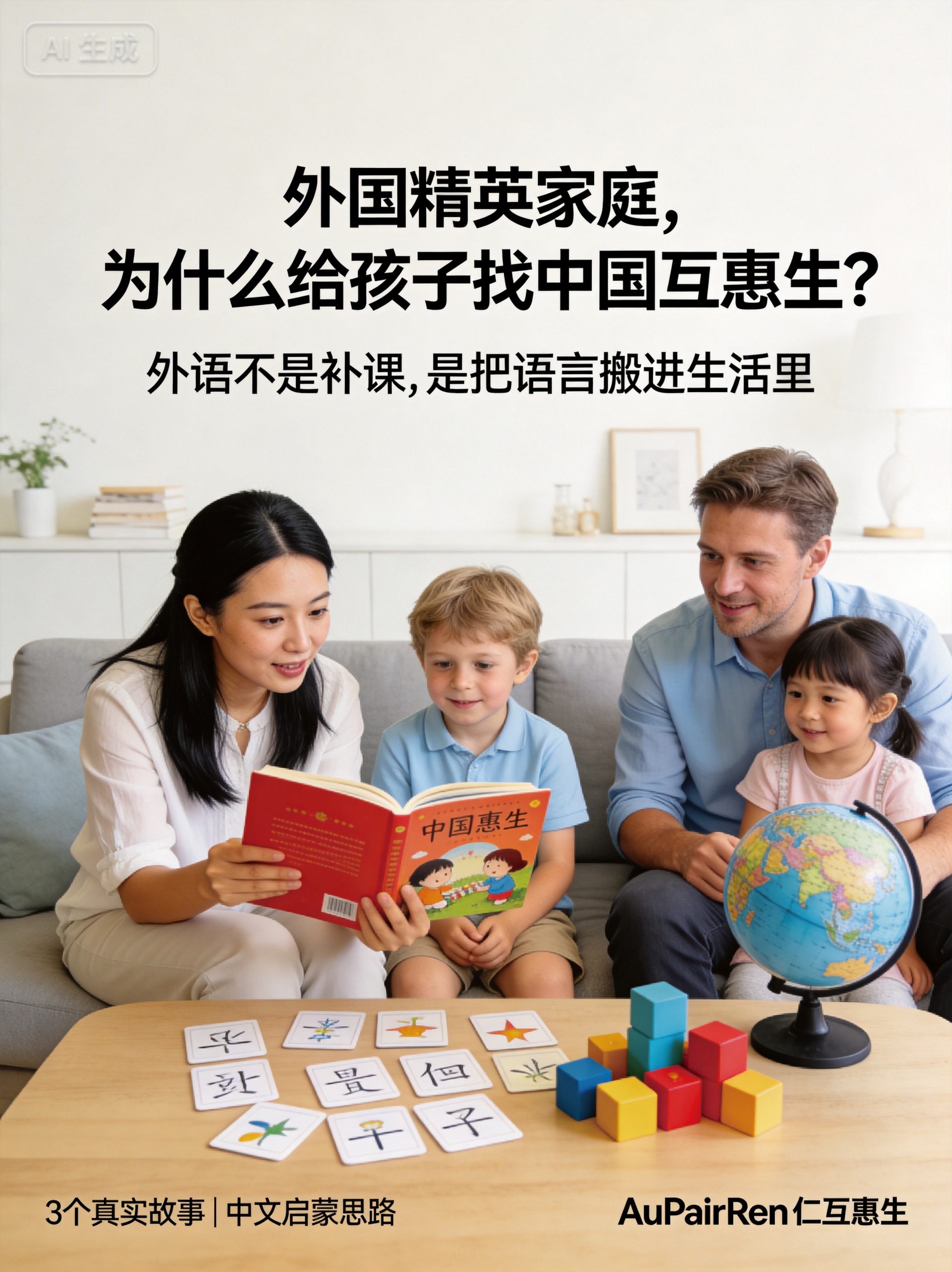
比如华盛顿的 Lilly Liu Minkove 一家。她有高盛、麦肯锡等职业背景,家里两个孩子平时就在家说中文,还请了中国互惠生,把居家时间设计成每天的中文歌、游戏和互动活动。对这类家庭来说,中文不是兴趣班,而是未来竞争力的一部分。💼
再看纽约这户家庭。他们请来来自中国的 Rebecca,原因说得非常直接:就是想让女儿学中文、接触中国文化。互惠生把绘本、音乐、食物和节日都带进了家里,结果孩子已经能听懂简单中文指令,还能按中文要求指出物品。你会发现,小朋友最先学会的,往往不是“考试中文”,而是生活中文。🧸
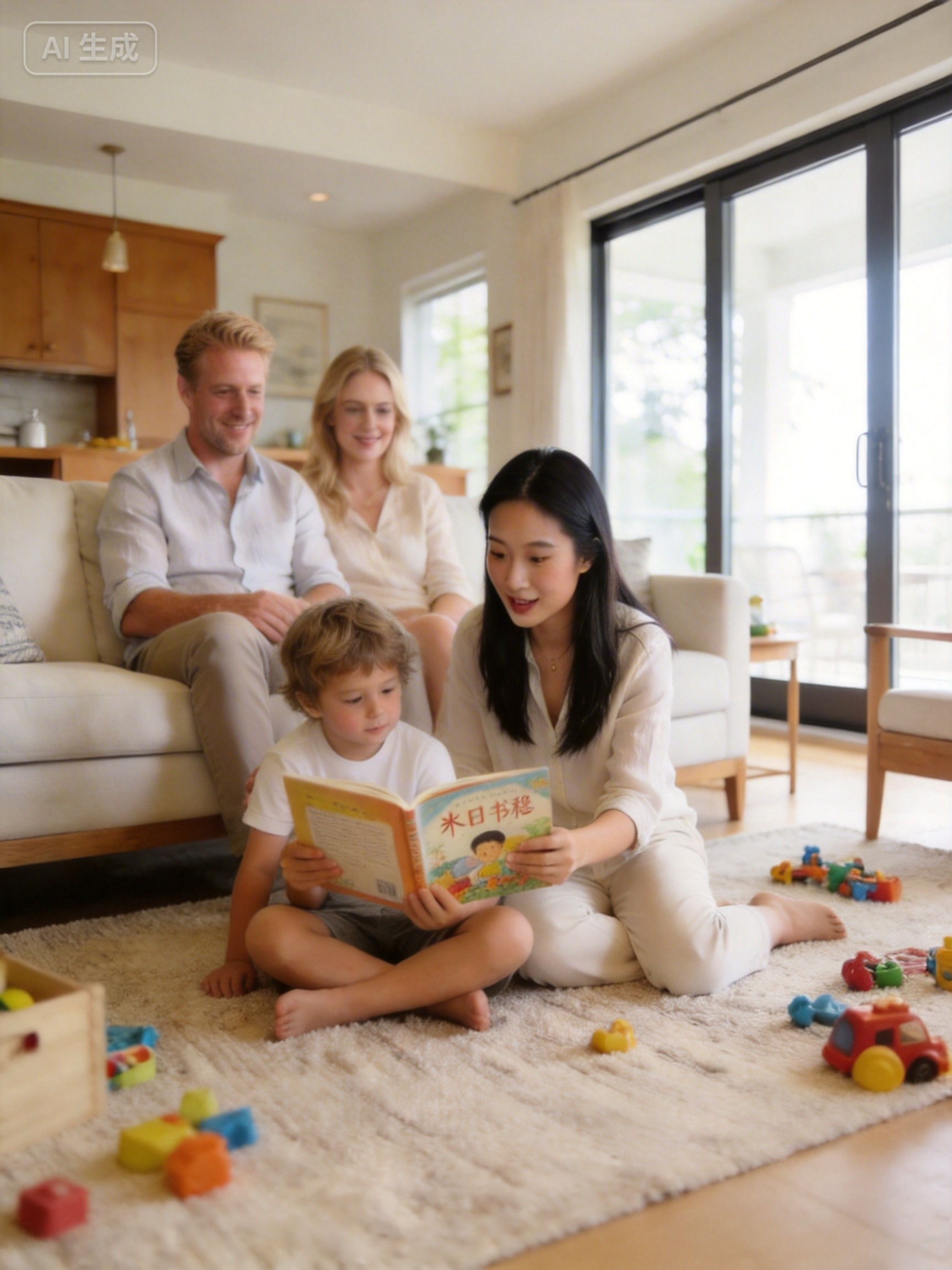
还有德州 Irving 的 Mitchell family。来自中国的互惠生 Meian 进入家庭后,不只是陪伴孩子成长,更把普通话真正带进了孩子的日常。公开故事里提到,这个原本只会两个音节的小男孩,后来到 3 岁时已经能用英语和普通话说话、数数。对父母来说,这种变化最宝贵的地方不是“学了多少词”,而是孩子真的把另一种语言活成了日常。🚀
所以很多外国家庭早就想明白了:外语启蒙最有效的方式,不一定是更贵的课,而是更早的语言环境。中文如此,英语也一样。对中国家庭来说,如果你也希望孩子从小有更自然的英语输入,其实完全可以反向借鉴——找一位英语母语的外国互惠生,让语言出现在每天真实的生活里。不是把鸡娃做得更重,而是把语言变得更轻、更自然。🤍
Not long ago, many people assumed that learning a foreign language meant waiting until school age, signing up for classes, and memorizing vocabulary. But plenty of American families with a truly global mindset have long embraced a different approach: they bring the language environment straight into their home—by hosting a Chinese-speaking au pair. Their children absorb Mandarin naturally during everyday moments like mealtime, playtime, storytime, outings, and bedtime. 🌍📚
For young children, language acquisition isn’t about how many lessons you take—it’s about high-frequency input, authentic interaction, and consistent repetition. If a language exists only in the classroom, it’s easily forgotten. But once it becomes part of daily life, it slowly turns into instinct. For many families abroad, having an au pair isn’t just about childcare—it’s about embedding bilingual and cross-cultural learning from the very beginning. ✨
Take the family of Lilly Liu Minkove in Washington, D.C. With a background at Goldman Sachs and McKinsey, she and her family already speak Chinese at home, and they’ve also welcomed a Chinese au pair who fills their daily routine with Chinese songs, games, and activities. For them, Mandarin isn’t an extracurricular—it’s part of their children’s future edge. 💼
Then there’s a family in New York who invited Rebecca from China into their home. Their reason was simple: they wanted their daughter to learn Chinese and experience Chinese culture. The au pair brought picture books, music, food, and festivals into their lives—and now their child can follow simple Chinese instructions and point to objects when asked in Mandarin. You realize: the first words kids pick up aren’t for exams—they’re the words of real life. 🧸
In Irving, Texas, the Mitchell family welcomed Meian, a Chinese au pair, into their home. She didn’t just accompany their child as he grew—she brought Mandarin into his daily world. According to their shared story, their son—who initially could only babble a couple of syllables—was speaking and counting in both English and Mandarin by age three. For his parents, the beauty of this change wasn’t about word counts—it was that their child had come to live in another language naturally. 🚀
So many foreign families have already figured it out: the most effective way to introduce a language isn’t necessarily a more expensive class—it’s an earlier language environment. The same logic applies to Chinese as it does to English. For Chinese families who want their child to grow up with more natural English exposure, you can absolutely learn from this model—by hosting a native English-speaking au pair, and letting language flow through everyday moments. It’s not about turning up the pressure—it’s about making language lighter, more present, and more human. 🤍