
有的找互惠生的家庭会抱怨说,互惠生有点呆愣!不像自己之前的育儿师/儿童陪伴师。
这个自然,互惠生多是在读学生,没有太多社会经验。此外,互惠生一般不熟谙当地语言,外国互惠生来中国不会几句中文,中国互惠生去了国外也不见得当地语言流利到与当地人沟通自如,自然会回避初始的社交。
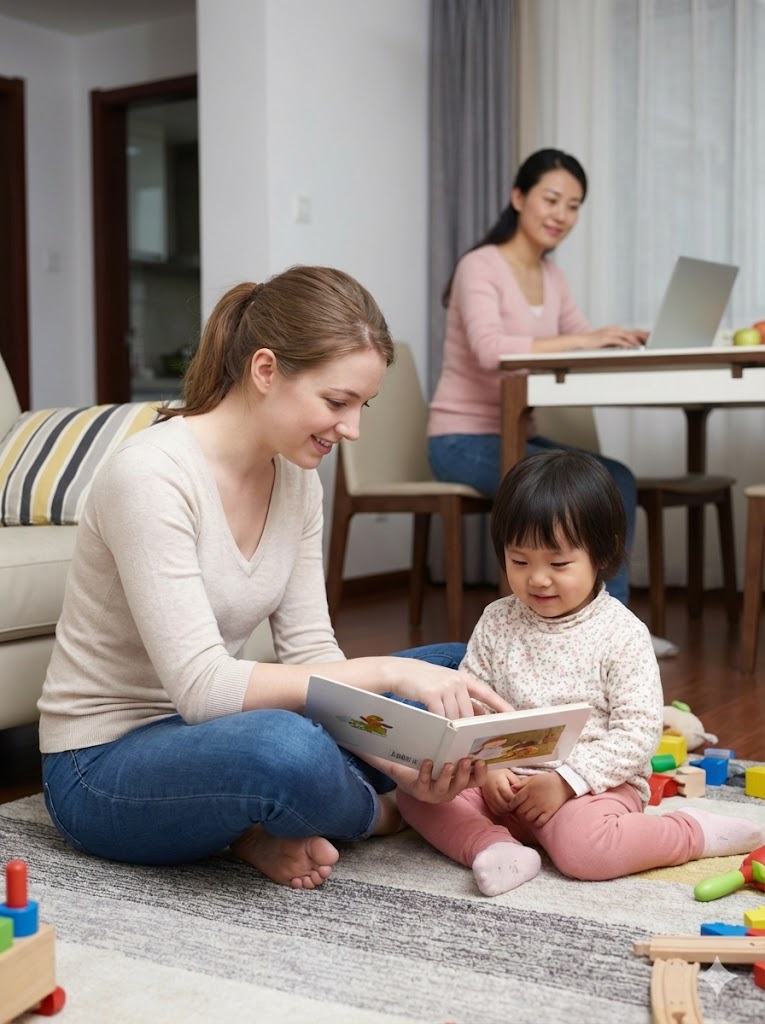
当时家长只要把握好了核心,关注互惠生带来的“内容优先级”,下面是一般的家庭关注点的优先级排序:
⬇️孩子语言能力提升
⬇️家长省心照顾、时间管理
⬇️孩子情绪、陪伴质量
⬇️增进文化视野、表达自信
给点时间和耐心,如果互惠生做的好,那么这些东西就能一点一点达到!
(来自一个多年找互惠生的家庭经验)
⬇️“我不是缺英语课,我缺一个每天稳定出现的高质量陪伴。”
⬇️“我想要孩子敢开口,而不是背单词背到哭。”
⬇️“最怕的是:人来了,家里更乱了。”
⬇️“英语只是表面,真正买的是秩序、情绪、时间。”
⬇️“我们要的是匹配,不是最好。”
Some host families complain that their au pair appears a bit awkward or reserved—unlike their previous nanny or childcare provider.
This is natural. Most au pairs are current students with limited life experience. Additionally, au pairs often aren’t fluent in the local language. A foreign au pair in China may know only basic Chinese, while a Chinese au pair abroad may not speak the local language well enough to communicate freely, leading them to withdraw socially at first.
What matters is that parents keep sight of the core value—the “content priorities” an au pair brings. Below is a typical host family’s priority ranking:
⬇️ Improving the child’s language skills
⬇️ Relieving parents’ childcare burden and helping with time management
⬇️ Enhancing the child’s emotional well-being and quality of companionship
⬇️ Broadening cultural horizons and building expressive confidence
Give it time and patience. If the au pair is a good fit, these benefits will gradually unfold!
(From the experience of a family that has hosted au pairs for years)
⬇️ “I don’t just need an English class—I need consistent, high-quality daily companionship.”
⬇️ “I want my child to dare to speak, not memorize vocabulary until they cry.”
⬇️ “What I fear most is having someone come and the home becoming even more chaotic.”
⬇️ “Language is just the surface; what we’re really investing in is order, emotional support, and time.”
⬇️ “We’re looking for compatibility, not perfection.”